Metal Slug

Introduction

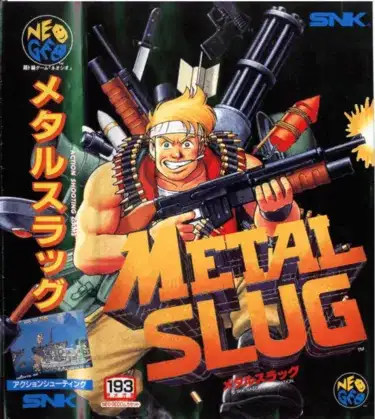
Metal Slug was developed by Nazca Corporation, a studio staffed largely by former Irem developers behind games like In the Hunt and GunForce II, and released by SNK for the Neo Geo MVS arcade system in April 1996, shortly before Nazca merged into SNK outright. The game underwent a major shift mid-development: it was originally a slower, darker side-scrolling shooter built around piloting the titular tank across short, grim missions, but after a location test drew a lukewarm response, programmer Shinichi Hamada and the team paused development for a month and reworked the concept around human soldiers instead, adopting a brighter visual style influenced by Hayao Miyazaki’s animation work. Players run and gun through war-torn stages as Marco or Tarma, shooting enemy soldiers and vehicles, rescuing captured POWs for bonus items and ammo, and hopping into the tank and other vehicles whenever one becomes available for a temporary firepower boost. Its hand-drawn pixel art, frantic but fair difficulty, and constant stream of over-the-top explosions and destructible scenery made Metal Slug an instant arcade classic and launched one of SNK’s most enduring franchises.

Metal Slug

How to Play Metal Slug Online

Press Start Game above and give the Neo Geo emulator a moment to load. Insert a coin with Select, then press Start to begin. Metal Slug uses only three buttons, so it is easy to play on a keyboard: by default the arrow keys move and Z and X handle the first two buttons; open Control Settings in the emulator menu to see or remap every key, or plug in a gamepad.

Metal Slug Controls

Neo Geo button Action
Joystick Move, aim up, crouch; aim down while jumping
A Shoot (knife attack when an enemy is close)
B Jump
C Throw a grenade
Inside the Metal Slug tank A fires the vulcan, C fires the main cannon, Down + B jumps out

Tips for Surviving All Six Missions

  • One hit kills. Marco and Tarma die from a single bullet, so keep moving and treat every soldier as a threat.
  • Free the prisoners. Bearded POWs tied up along the way drop weapons and items when you release them: Heavy Machine Gun (H), Rocket Launcher (R), Flame Shot (F), Shotgun (S) and extra bombs.
  • Save special ammo for bosses. Power weapons have limited ammo. Use the pistol on regular soldiers and keep the Heavy Machine Gun or Shotgun for big targets.
  • Use the tank. The SV-001 Metal Slug can take a few hits before exploding. If it starts flashing, jump out before it blows up.
  • Grenades go over cover. Throw them at soldiers hiding behind sandbags or inside vehicles.
  • Play co-op. Two players can play together, which makes the crowded later missions much easier.

Story and Setting

Marco Rossi and Tarma Roving of the Peregrine Falcon Squad fight General Morden’s rebel army, which has stolen the Regular Army’s new tank prototypes. The six missions move through forests, a snowy mountain base, a ruined city and a fortress, with large hand-drawn bosses at the end of each stage.

The Series After Metal Slug

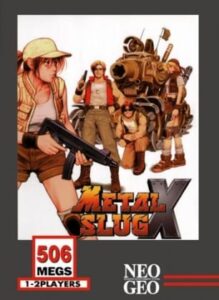
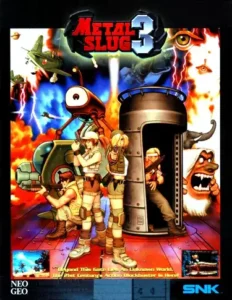
The first game started one of SNK’s best-loved series. Continue with Metal Slug 2, its enhanced version Metal Slug X and the long, branching Metal Slug 3. For another arcade run-and-gun with a co-op partner, try Shock Troopers.
Similar Posts

  • World Heroes 2

    Introduction World Heroes 2 was developed and published by ADK, with assistance from SNK, for the Neo Geo MVS arcade system, released in April 1993 as the sequel to 1992’s World Heroes and notably the first release to carry the ADK name after the studio rebranded from its earlier identity as Alpha Denshi. The game…

  • Strikers 1945

    Introduction Strikers 1945 was developed and published by Psikyo, released in arcades in 1995 as the Japanese shoot ’em up studio’s tribute to Capcom’s earlier 19XX series, borrowing that franchise’s WWII fighter-plane theme while building an entirely original game around it. Players choose from a roster of real and fictional World War II-era aircraft, each…

  • Marvel Super Heroes

    Introduction Marvel Super Heroes was developed and published by Capcom on CPS-2 arcade hardware, released in November 1995 as the studio’s second Marvel-licensed fighting game, following 1994’s The Punisher, and its first entry built around a proper Marvel Comics superhero roster rather than a single licensed property. Loosely adapting Marvel’s Infinity Gauntlet comic book storyline,…