Street Fighter II: The World Warrior (Arcade)

Introduction

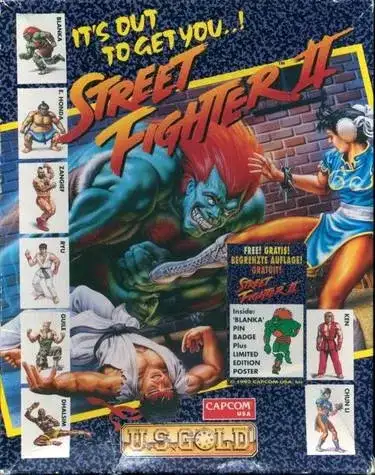
Street Fighter II: The World Warrior was developed and published by Capcom, released in arcades in 1991 under the direction of Akira Nishitani and Akira Yasuda. The game let players choose from eight playable World Warriors, including Ryu, Ken, Chun-Li, and Blanka, each with a distinct fighting style, before facing four powerful boss characters on the way to the champion, M. Bison. Special moves like Ryu and Ken’s Hadouken fireball and Shoryuken uppercut, executed through specific joystick-and-button motions, gave the game a technical depth arcade fighters hadn’t offered before, and players soon discovered that chaining certain moves together created damaging combos the designers hadn’t originally planned for. That emergent complexity, combined with head-to-head competitive play against a second player rather than the computer, turned Street Fighter II into a genuine arcade phenomenon that revived flagging arcade attendance in the early 1990s. Its success established the template for nearly every fighting game that followed and launched one of the best-selling and longest-running franchises in video game history.
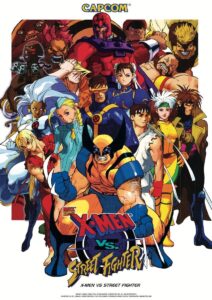
Street Fighter II: The World Warrior (Arcade)

Similar Posts

  • Galaga

    Introduction Galaga was developed and published by Namco for arcades in 1981, led by longtime company veteran Shigeru Yokoyama, and released in North America by Midway. It exists as a direct sequel to 1979’s Galaxian, Namco’s first genuine arcade hit, and came about somewhat by necessity: as Galaxian cabinet sales began slowing by the early…

  • Raiden

    Introduction Raiden reached arcades in September 1990 and became the breakout success of its developer, Seibu Kaihatsu, after years of lower-profile releases. Distribution was split by territory: Tecmo handled Japan while Fabtek brought the game to North American operators. Players pilot the Fighting Thunder fighter craft against an alien invasion, working through eight densely populated…

  • Toki

    Introduction TAD Corporation released Toki in Japanese arcades in December 1989 under the title JuJu Densetsu, with Fabtek handling the North American release as Toki in February 1990. Akira Sakuma designed it around a premise no other platformer of the era shared: an evil sorcerer transforms the hero into an ape and abducts the woman…

  • Elevator Action Returns

    Introduction Elevator Action Returns was developed and published by Taito, released in Japanese arcades in 1994 as the sequel to the studio’s 1983 original, Elevator Action. Players once again control a spy infiltrating tall, multi-floor buildings, riding elevators and escalators between levels while shooting enemy agents, collecting secret documents from marked red doors, and avoiding…

  • Double Dragon (Arcade)

    Introduction Double Dragon is Technos Japan’s original 1987 arcade beat ’em up, created by designer Yoshihisa Kishimoto as a spiritual successor to his earlier Nekketsu Kōha Kunio-kun after company executives pushed for the next game to support two simultaneous players. Kishimoto drew inspiration from gritty street-gang pop culture of the era, citing the 1979 film…

  • Metal Slug 6

    Introduction Metal Slug 6 occupies an unusual place in the Metal Slug series’ history: rather than an official SNK release, it is a bootleg arcade board built by unlicensed manufacturers using Metal Slug 3’s engine and assets, remixing stages, enemy placement, and weapon balance into what plays as an unofficial remix rather than a genuine…