Fatal Fury Special

Introduction

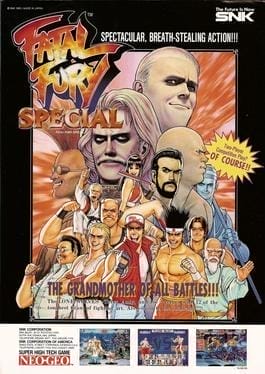
Fatal Fury Special was developed and published by SNK, produced by Eikichi Kawasaki with design by Takashi Tsukamoto, released to Neo Geo arcades in September 1993 as an expanded update of the previous year’s Fatal Fury 2. Rather than a full sequel, it reworked that game’s roster and balance, promoting four previously CPU-only boss characters into playable fighters, bringing back three characters cut from Fatal Fury 2, and introducing proper chain combos alongside broader gameplay tuning across the board. The update struck a chord in Japan, becoming one of the country’s most successful arcade cabinets of 1993 and going on to rank as the third highest-grossing arcade game in Japan the following year, trailing only Super Street Fighter II X and Virtua Fighter. Its most lasting legacy, though, came from a hidden character cameo: including Art of Fighting’s Ryo Sakazaki as a secret playable fighter proved so popular with players that SNK built directly on that crossover idea, and the resulting concept evolved into what would become The King of Fighters series the following year. Players fight through the series’ usual roster of martial artists across two-plane arenas that let combatants dodge between foreground and background, a mechanic that remained a Fatal Fury signature throughout the franchise.
Fatal Fury Special

Similar Posts

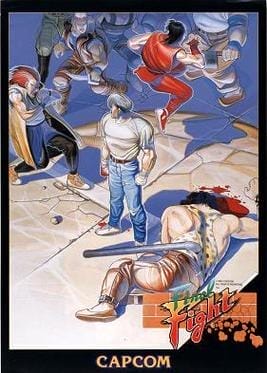
  • Final Fight

    Introduction Final Fight was developed and published by Capcom, released in arcades in 1989, designed by Akira Nishitani and Akira Yasuda. Set in the crime-ridden Metro City, the game follows former pro wrestler turned mayor Mike Haggar, along with martial artist Cody and ninja Guy, as they fight their way through the streets to rescue…

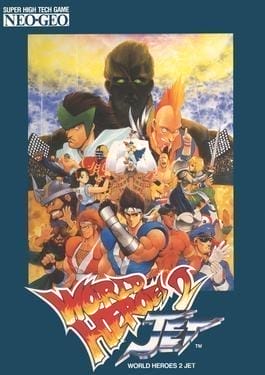
  • World Heroes 2

    Introduction World Heroes 2 was developed and published by ADK, with assistance from SNK, for the Neo Geo MVS arcade system, released in April 1993 as the sequel to 1992’s World Heroes and notably the first release to carry the ADK name after the studio rebranded from its earlier identity as Alpha Denshi. The game…

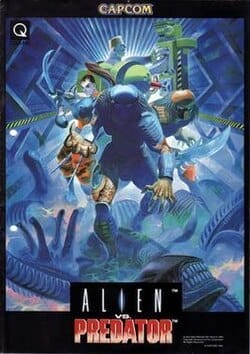
  • Alien vs. Predator

    Introduction Alien vs. Predator was developed and published by Capcom on its CPS-2 arcade hardware, licensed from Twentieth Century Fox and built by a team including designers Tetsuya Iijima, Toshihiko Uda, and Jun Matsumura with a score by Hideki Okugawa, releasing in Japanese arcades in May 1994 before reaching other regions shortly after. Capcom leaned…

  • Pang! 3

    Introduction Pang! 3 was released in arcades in 1995 by Mitchell Corporation, the third main entry in the balloon-popping series that began with Pang. The rules are simple and addictive: bouncing balloons fill the screen, and firing at one splits it into two smaller balloons, which continue to split until they disappear. Touching a balloon…