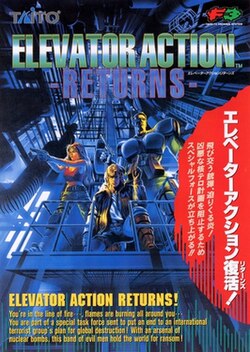
Elevator Action Returns

Introduction

Elevator Action Returns was developed and published by Taito, released in Japanese arcades in 1994 as the sequel to the studio’s 1983 original, Elevator Action. Players once again control a spy infiltrating tall, multi-floor buildings, riding elevators and escalators between levels while shooting enemy agents, collecting secret documents from marked red doors, and avoiding gunfire on the way to each stage’s exit. The sequel significantly expanded on the original’s simple premise with more elaborate, vertically sprawling level designs, additional vehicle types like conveyor belts and moving platforms layered into the elevator-based navigation, and a noticeably faster, more frantic pace than the more methodical original. Two-player cooperative play let a second spy join the mission, adding chaotic depth to levels already built around fast vertical traversal and precise gunfights in tight spaces. Though it never achieved the same broad name recognition as the original Elevator Action, Elevator Action Returns is frequently cited by shoot ’em up and platformer enthusiasts as a genuine improvement over its predecessor and one of Taito’s most underrated arcade releases of the mid-1990s.
Elevator Action Returns

Similar Posts

  • The Humans

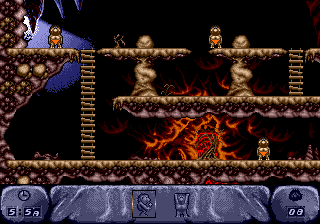
    Introduction The Humans was developed by Imagitec Design and published by GameTek for the Genesis in 1992, following its original release on the Amiga earlier that same year through Mirage Technologies. The game is a puzzle-platformer set in prehistoric times, tasking players with guiding a tribe of cavemen through environmental puzzles using cooperative teamwork mechanics,…

  • Another World

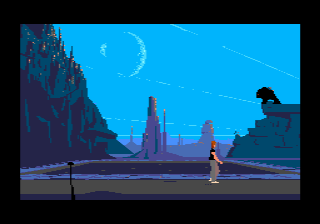
    Introduction Another World, released in North America as Out of This World, was designed by Éric Chahi and published by Delphine Software International, originally released for the Amiga and other home computers in November 1991 before reaching the Genesis in 1993. The game follows physicist Lester Knight Chaykin, transported to a hostile alien world after…

  • The King of Fighters ’95

    Introduction SNK released The King of Fighters ’95 for the Neo Geo in 1995, the second game in the series. The tournament returns with its three-on-three team battles, but this entry introduced the Team Edit mode, allowing players to build their own teams from any of the fighters rather than using fixed trios. It also…

  • Galaga

    Introduction Galaga was developed and published by Namco for arcades in 1981, led by longtime company veteran Shigeru Yokoyama, and released in North America by Midway. It exists as a direct sequel to 1979’s Galaxian, Namco’s first genuine arcade hit, and came about somewhat by necessity: as Galaxian cabinet sales began slowing by the early…