Pac-Man (Arcade)
Introduction
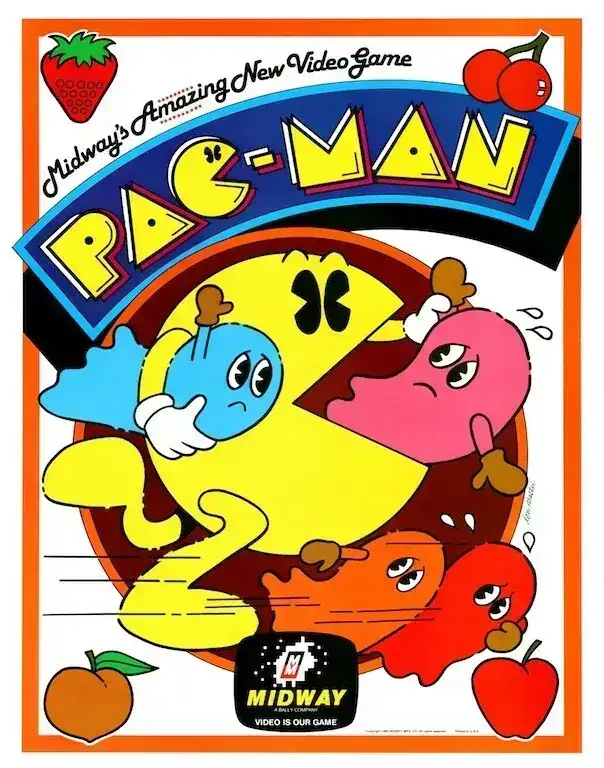
Pac-Man was developed by Namco and released in Japanese arcades in 1980, designed by Toru Iwatani as a deliberate departure from the space-shooting games that dominated the era. Players guide the yellow, dot-eating Pac-Man through a maze, clearing every pellet on the screen while being chased by four distinctly personality-driven ghosts, Blinky, Pinky, Inky, and Clyde, each programmed with its own pursuit behavior. Four large power pellets placed in the maze’s corners briefly turn the tables, letting Pac-Man eat the fleeing ghosts for bonus points before they respawn and resume the chase. Iwatani designed the game to appeal beyond the young male audience arcades typically attracted, aiming for something approachable, non-violent, and visually cheerful, a choice that helped Pac-Man become one of the best-selling and most recognizable arcade games ever made. Its instantly identifiable character design, simple one-button controls, and escalating maze difficulty turned it into a genuine cultural phenomenon well beyond gaming, spawning sequels, merchandise, an animated series, and a legacy that still defines the maze-chase genre today.