The Humans

Introduction

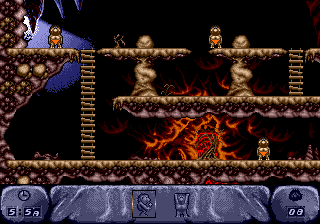
The Humans was developed by Imagitec Design and published by GameTek for the Genesis in 1992, following its original release on the Amiga earlier that same year through Mirage Technologies. The game is a puzzle-platformer set in prehistoric times, tasking players with guiding a tribe of cavemen through environmental puzzles using cooperative teamwork mechanics, such as stacking multiple characters into a human ladder to reach higher platforms, or having one caveman carry a torch, rope, or spear to help others navigate hazards a single character couldn’t overcome alone. Each level required careful coordination of the available cavemen’s positions and tools rather than direct action, giving the game a genuinely different puzzle-solving rhythm from more conventional platformers, closer in spirit to a lateral-thinking puzzle game wrapped in prehistoric platforming visuals. Its emphasis on group-based problem solving and clever level design earned it positive reviews across the many platforms it was ported to, and it remains a fondly remembered, if lesser-known, entry in the genre of cooperative-mechanic puzzle-platformers from the early 1990s.

↑ = up
→ = right
↓ = down
← = left

Z = A Button
X = B Button
A = X Button
S = Y Button

Q = L Button
E = R Button

Shift = Select
Enter = Start
The Humans

Similar Posts

  • Pac-Man (Arcade)

    Introduction Pac-Man was developed by Namco and released in Japanese arcades in 1980, designed by Toru Iwatani as a deliberate departure from the space-shooting games that dominated the era. Players guide the yellow, dot-eating Pac-Man through a maze, clearing every pellet on the screen while being chased by four distinctly personality-driven ghosts, Blinky, Pinky, Inky,…

  • Férias Frustradas do Pica-Pau

    Introduction Férias Frustradas do Pica-Pau (Portuguese for Woody Woodpecker’s Frustrated Vacations) was developed and published by Tectoy exclusively for the Brazilian market, released for the Sega Mega Drive and Sega Master System. Tectoy held the Brazilian license for Walter Lantz’s Woody Woodpecker character and built an original platform game around him rather than localizing an…

  • Donkey Kong Country

    Introduction Donkey Kong Country was developed by Rare and published by Nintendo, released on the SNES in November 1994 as a platformer built around Rare’s then-groundbreaking use of pre-rendered 3D CGI models compressed down into detailed 2D sprites, giving the game a visual polish that stood out sharply from most of its contemporaries. Players control…

  • Blaster Master

    Introduction Blaster Master was developed and published by Sunsoft, a studio better known during the 8- and 16-bit era for licensed tie-in games, with directors Hiroaki Higashiya and Koichi Kitazumi, designer Kenji Sada, and composer Naoki Kodaka leading a small team of around five people on what became the company’s one original flagship franchise. It…

  • Streets of Rage

    Introduction Streets of Rage was developed and published by Sega, released for the Genesis in 1991 as the first entry in what would become one of the system’s most celebrated beat ’em up series. Players choose one of three former police officers, Axel Stone, Blaze Fielding, or Adam Hunter, who resign from the force to…

  • Dragon Ball Z

    Introduction For more information about Dragon Ball Z: Super Butōden, you can check this detailed article about the game and a gameplay guide on StrategyWiki. Dragon Ball Z: Super Butōden, also known as simply Dragon Ball Z in Europe, is a 1993 fighting video game developed by Tose and published by Bandai for the Super…