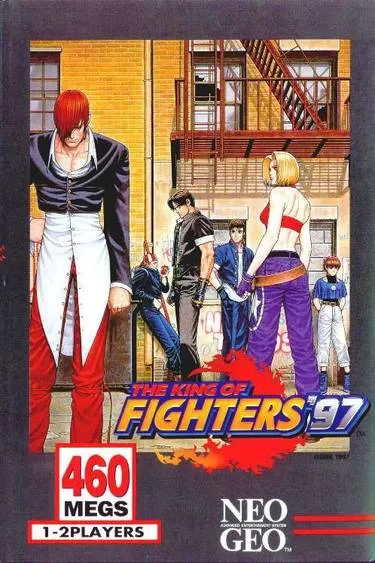
The King of Fighters ’97

Introduction

The King of Fighters ’97 was developed and published by SNK for the Neo Geo MVS arcade system, directed by Toyohisa Tanabe and produced by Takashi Nishiyama, released to Japanese arcades in July 1997 as the fourth entry in the series. It serves as the climax of the so-called Orochi Saga, a storyline running since 1995 in which servants of the ancient demon Yamata no Orochi manipulate the King of Fighters tournament to gather the sacrifices and energy needed to revive their master, giving this entry a heavier narrative weight than a typical yearly fighting-game update. Teams of three once again battle across the series’ signature three-on-three format, choosing between the Advanced and Extra fighting styles introduced the previous year, which let players lean into either combo-heavy offense or a more defensive, dodge-focused approach. Its tighter roster curation, refined mechanics, and dramatic story payoff made KOF ’97 a landmark release even by the series’ own high standards, and it’s still frequently cited by longtime fighting game players as one of the best entries in the entire King of Fighters franchise.
The King of Fighters ’97

Similar Posts

  • Metal Slug 3

    Introduction Metal Slug 3 was developed and published by SNK for the Neo Geo MVS arcade system, released in 2000 as the third mainline entry in the run-and-gun series. Building on the technical lessons learned from the sprite-heavy Metal Slug 2, the game refined performance while going even further creatively, introducing branching mid-level paths that…

  • Puzzle Bobble

    Introduction Puzzle Bobble, released outside Japan as Bust-A-Move, was developed and published by Taito, released in arcades in 1994 as a spin-off built directly from the world of Bubble Bobble. Players aim and shoot colored bubbles from a cannon at the bottom of the screen up into a shrinking field of bubbles above, matching three…

  • Mega Twins

    Introduction Capcom released Mega Twins in arcades in 1990, known in Japan as Chiki Chiki Boys. It tells the story of the twin princes of the kingdom of Alurea, who set out to defeat a monster that has devastated their home. The game is a side-scrolling action platformer with cute, colourful graphics and a surprising…

  • Strikers 1945 II

    Introduction Strikers 1945 II was developed and published by Psikyo, released in arcades in 1997 as the direct sequel to the original 1995 Strikers 1945. The game expanded the roster of playable World War II-themed fighter planes with new aircraft and refined each one’s weapon patterns and special bomb attacks, while introducing a wider variety…

  • Double Dragon II: The Revenge

    Introduction Double Dragon II: The Revenge was developed and published by Technos Japan, released in arcades in 1988 as the direct sequel to the genre-defining original Double Dragon. The game opens with the previous game’s villain gang gunning down Marian, the love interest whose kidnapping drove the first game’s plot, sending martial artist brothers Billy…