Life Force

Introduction

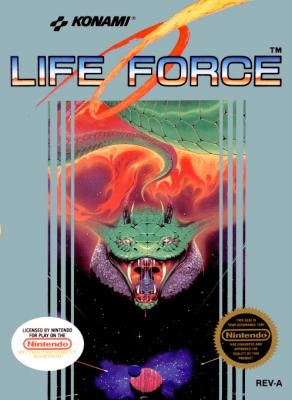
Life Force was developed and published by Konami, originating as the 1986 arcade shoot ’em up Salamander, a spin-off of the studio’s hit Gradius built instead of an immediate direct sequel and released internationally under the Life Force name. Rather than a straight arcade port, Konami used the NES conversion, which reached Japan in 1987 and North America in August 1988, to rework the game’s presentation around an entirely new story about a squadron flying inside a colossal living organism, giving the whole game an organic, biomechanical visual theme distinct from the original Salamander’s more traditional space setting. It kept Salamander’s key innovations over the original Gradius, including a simplified, immediate power-up system instead of Gradius’s segmented meter, full two-player simultaneous co-op, and stages that alternate between horizontal and vertical scrolling rather than staying locked to one direction. Players again pilot the Vic Viper, or a second Lord British ship in co-op, blasting through waves of Bacterion forces and the game’s memorably grotesque organic boss creatures, and the NES version’s distinctive body-horror aesthetic has made it one of the more visually striking shooters in the console’s library.
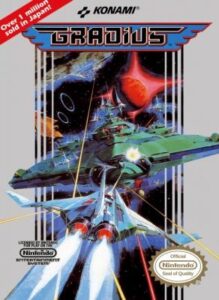
Life Force

Similar Posts

  • Raiden II

    Introduction Seibu Kaihatsu released Raiden II in arcades in 1993 as the sequel to its hugely successful vertical shooter. The alien invaders from the first game return to Earth, and once again the player pilots the Raiden fighter against waves of tanks, battleships, gun emplacements and enormous bosses. The main weapons are the familiar red…

  • Metal Gear

    Introduction Metal Gear began life as Hideo Kojima’s directorial debut, originally released by Konami for the MSX2 computer in Japan and parts of Europe in 1987. The NES version that followed, reaching Japan in December 1987 and North America the following June through Konami’s Ultra Games label, has a notably messier history: a separate Tokyo-based…

  • Ninja Gaiden

    Introduction Ninja Gaiden was developed and published by Tecmo for the NES, directed by Hideo Yoshizawa with art by Masato Kato, released in Japan in December 1988 and in North America the following March. It ran in parallel with an unrelated arcade beat ’em up of the same name built by a different team, sharing…

  • Wario’s Woods

    Introduction Nintendo released Wario’s Woods in 1994 for both the NES and the Super Nintendo, and the NES version is known as the last game Nintendo itself published for the console in North America. Wario has taken over the Peaceful Woods and filled it with monsters, and Toad sets out to clear them with help…

  • Romance of the Three Kingdoms

    Introduction Romance of the Three Kingdoms was developed and published by Koei, released for the NES in 1990 as a home console adaptation of the studio’s PC grand strategy series based on the classical Chinese novel of the same name. Players take control of one of many warlords during China’s Three Kingdoms period, managing cities,…

  • Blaster Master

    Introduction Blaster Master was developed and published by Sunsoft, a studio better known during the 8- and 16-bit era for licensed tie-in games, with directors Hiroaki Higashiya and Koichi Kitazumi, designer Kenji Sada, and composer Naoki Kodaka leading a small team of around five people on what became the company’s one original flagship franchise. It…