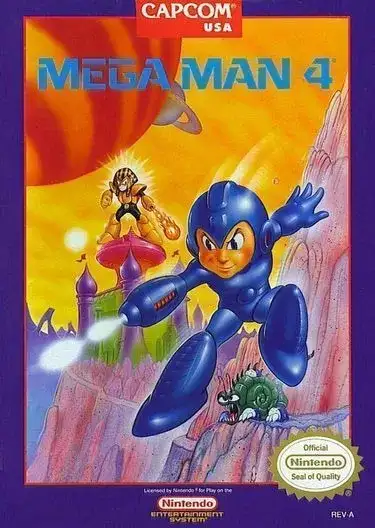
Mega Man 4

Introduction

Mega Man 4 was developed and published by Capcom, produced by Tokuro Fujiwara with Keiji Inafune continuing on as character designer, and released in Japan in December 1991 under the studio’s push for annual sequels following the series’ continued commercial success, reaching North America the following month. The biggest gameplay addition was the Mega Buster’s new charge shot, letting players hold down the fire button to unleash a more powerful blast, a change that reportedly sparked internal debate at Capcom over whether it would make the Robot Masters’ unique weapons feel less essential by comparison. The story also grew more ambitious than previous entries, introducing new antagonist Dr. Cossack and a mid-game twist involving his daughter Kalinka that gave the plot more emotional stakes than the series had shown before. Players once again choose their own path through eight Robot Master stages, absorbing their weapons Mega Man-style, this time with the charge shot giving them a reliable fallback option even before finding a stage-specific counter, a design choice that stuck around for the rest of the classic series.
Mega Man 4

Similar Posts

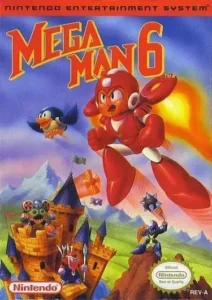
  • Mega Man 6

    Introduction Mega Man 6 was developed by Capcom and released in Japan in October 1993, but by that point Capcom’s Japanese arm had largely moved on from the aging NES, so for the first time Nintendo of America stepped in to co-fund and publish the game in the West itself, bringing it to North America…

  • Tetris

    Introduction Tetris was originally designed and programmed in June 1984 by Soviet software engineer Alexey Pajitnov, and its Western publishing rights became the subject of a famously tangled licensing battle in the years that followed, with Andromeda Software, Mirrorsoft, Atari Games subsidiary Tengen, and Nintendo all fighting over who actually held the console rights. Tengen…

  • Strider

    Welcome to Strider, play this classic retro game directly in your browser! Enjoy the nostalgic experience. About Strider Strider on the Sega Genesis is a 1990 home conversion of Capcom’s 1989 arcade classic, and it’s widely considered the best console port of the game thanks to the Genesis hardware being unusually close to Capcom’s original…

  • Kirby Super Star

    Introduction Kirby Super Star was developed by HAL Laboratory and published by Nintendo, released for the SNES in 1996 as a compilation of eight distinct sub-games built around Kirby’s signature Copy Ability. Rather than one continuous adventure, the game let players choose from varied experiences ranging from the sprawling platforming of Spring Breeze and Dyna…

  • Final Fantasy III

    Introduction Final Fantasy III was developed and published by Square, released for the Famicom in Japan in 1990 as the third entry in the series, notable for introducing the Job Change system that let party members switch freely between classes like Knight, Black Mage, and Dragoon rather than being locked into a single role for…