Mega Man
Introduction
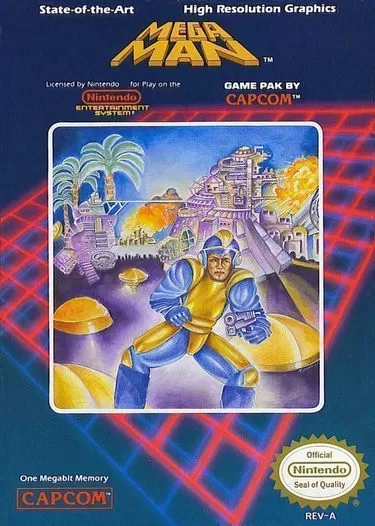
Mega Man was developed and published by Capcom, released for the Famicom in Japan in December 1987 by a small six-person team working under a project supervisor who reportedly pushed for perfection in every detail despite the tight crew size. Fresh Capcom hire Keiji Inafune, credited on the game as ‘Inafuking,’ designed and illustrated nearly all of the game’s characters and enemies, as well as the Japanese box art and instruction manual artwork, launching what would become a defining role for him across the series’ NES and Super NES years. Players control the titular robot hero as he battles through the fortresses of six Robot Masters in any order the player chooses, absorbing each defeated boss’s signature weapon to use against the others in a rock-paper-scissors style of weakness-exploiting that became the series’ signature mechanic. Despite a slow initial commercial reception, Mega Man’s tight platforming, memorable chiptune soundtrack, and non-linear stage select established a formula that would carry the franchise through dozens of sequels and spin-offs over the following decades.
Mega Man
How to Play Mega Man Online
Press Start Game above and wait for the NES emulator to load, then press Start. Choose any of the six Robot Master stages; beating a boss gives you its weapon. By default the arrow keys are the D-pad and the Z and X keys are the NES buttons; check or remap them in Control Settings in the emulator menu.
Controls
| NES button | Action |
|---|---|
| D-pad | Run, climb ladders |
| A | Jump |
| B | Fire the Mega Buster or the selected weapon |
| Start | Open the weapon menu |
Robot Master Weaknesses
Each boss is weak to another boss’s weapon, so the order you choose matters:
- Cut Man is weak to Guts Man’s Super Arm.
- Guts Man is weak to Bomb Man’s Hyper Bomb.
- Ice Man is weak to Elec Man’s Thunder Beam.
- Bomb Man is weak to Fire Man’s Fire Storm.
- Fire Man is weak to Ice Man’s Ice Slasher.
- Elec Man is weak to Cut Man’s Rolling Cutter.
Tips
- Start with Cut Man or Elec Man for an easier route through the rest of the bosses.
- Get the Magnet Beam in Elec Man’s stage. It creates platforms and is needed to reach parts of Dr. Wily’s castle.
- Use the Super Arm to throw blocks at enemies and clear paths in Guts Man’s stage and beyond.
- Learn the disappearing blocks. Their pattern always repeats, so watch one full cycle before jumping.
- The Yellow Devil in Wily’s castle is the toughest boss; dodge its flying pieces and hit the eye when it opens.
Legacy
Capcom’s 1987 original introduced the stage select and weapon-copying system that every later Mega Man game used. Continue with Mega Man 2 and Mega Man 3, or jump to Mega Man 5 and the SNES Mega Man X.