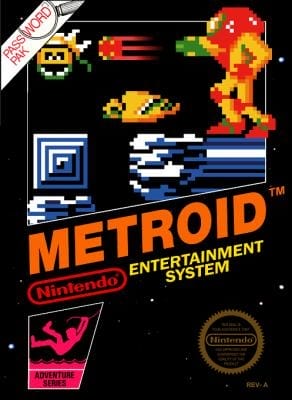
Metroid

Introduction

Metroid was developed by Nintendo R&D1 under producer Gunpei Yokoi, first released for the Famicom Disk System in Japan in August 1986 before arriving on cartridge for the NES in North America the following year. The team set out to blend Super Mario Bros’s side-scrolling action with The Legend of Zelda’s open, non-linear exploration, and character designer Hiroji Kiyotake gave the resulting bounty hunter protagonist, Samus Aran, a fully enclosed powered suit inspired partly by the reveal-driven tension of Ridley Scott’s Alien. Players guide Samus through the caverns of planet Zebes, backtracking through an interconnected map to find upgrades like the Morph Ball and Ice Beam that open up previously inaccessible areas, in a structure that would later be recognized as foundational to what’s now called the ‘Metroidvania’ genre. The game’s most famous twist was reserved for players who finished quickly: removing Samus’s helmet at the ending reveals her as a woman, a rare and deliberately underplayed choice for a lead action-game protagonist at the time.

Metroid

How to Play Metroid Online

Press Start Game above and wait for the NES emulator to load, then press Start. You explore the underground of planet Zebes as bounty hunter Samus Aran, collecting upgrades that open new paths. By default the arrow keys are the D-pad and the Z and X keys are the NES buttons; check or change the layout in Control Settings in the emulator menu.

Metroid Controls

NES button Action
Left / Right Run
Up Aim up
Down Roll into the Morph Ball (once you have it)
A Jump
B Fire beam or missile; drop a bomb in Morph Ball form
Select Switch between beam and missiles
Start Pause

Tips for Exploring Zebes

  • Go left first. The Morph Ball, which lets Samus roll through small gaps, is just to the left of the starting point.
  • Bomb walls and floors. Many secret passages and upgrades are hidden behind blocks that break with bombs or shots.
  • Collect Energy Tanks and missile expansions before taking on bosses.
  • Refill on endless enemies. Some creatures keep flying out of pipes; shoot them to collect health and missiles.
  • Freeze Metroids. In Tourian, use the Ice Beam to freeze a Metroid, then hit it with missiles.
  • Write down the password when you see it, so you can continue later.

Story and Legacy

Samus must defeat the bosses Kraid and Ridley to open the way to Tourian, where Mother Brain controls the Metroid creatures. Metroid’s open, non-linear map, together with its twist ending that reveals Samus is a woman, made it a landmark of the NES. The series continued on the Super Nintendo with Super Metroid, and the exploration style it created inspired many games. For more NES adventure, play The Legend of Zelda or Castlevania.
Similar Posts

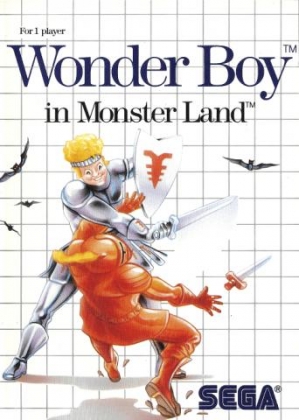
  • Wonder Boy in Monster Land

    Introduction Wonder Boy in Monster Land was developed by Westone and released by Sega in arcades in 1987, with the Master System version following in 1988. Many years after the first Wonder Boy, a fire-breathing MEKA dragon has invaded the peaceful Wonder Land and filled it with monsters, and the hero returns, now armed with…

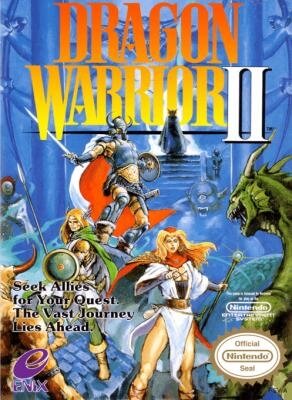
  • Dragon Warrior II

    Introduction Dragon Warrior II, known in Japan as Dragon Quest II, was developed by Chunsoft and published by Enix, again written and designed by series creator Yuji Horii with Koichi Nakamura directing, character art from Akira Toriyama, and music by Koichi Sugiyama. It released for the Famicom in Japan in January 1987 and reached the…

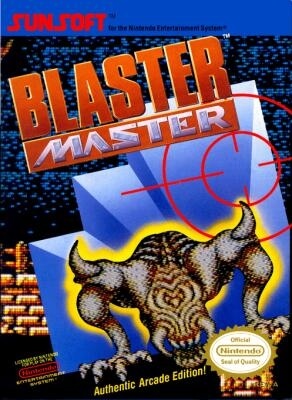
  • Blaster Master

    Introduction Blaster Master was developed and published by Sunsoft, a studio better known during the 8- and 16-bit era for licensed tie-in games, with directors Hiroaki Higashiya and Koichi Kitazumi, designer Kenji Sada, and composer Naoki Kodaka leading a small team of around five people on what became the company’s one original flagship franchise. It…

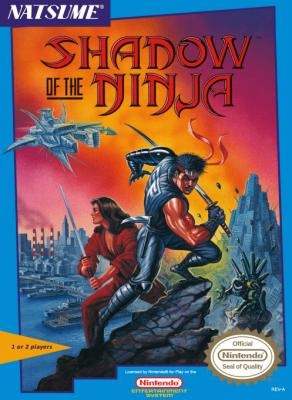
  • Shadow of the Ninja

    Introduction Shadow of the Ninja, released in Japan as Kage, was developed and published by Natsume, released on the NES in 1990 as a fast-paced action platformer set in a dystopian near-future America under the rule of the tyrant Emperor Garuda. Players choose between two ninja protagonists, Hayate and Kaede, each armed with a sword…

  • River City Ransom

    Introduction River City Ransom was developed and published by Technos Japan, directed by Mitsuhiro Yoshida and Hiroyuki Sekimoto with music by Kazuo Sawa, and released in Japan in April 1989 as the first game the studio built specifically for a home console rather than adapting from arcades. It’s the third entry in the Kunio-kun series…

  • Rad Racer

    Introduction Rad Racer, known in Japan as Highway Star, was developed and published by Square, directed by Hironobu Sakaguchi and programmed by Nasir Gebelli, with art from Kazuko Shibuya and an early soundtrack credit for Nobuo Uematsu, several of whom would go on to build the original Final Fantasy together the very same year. Square…