Pang

Introduction

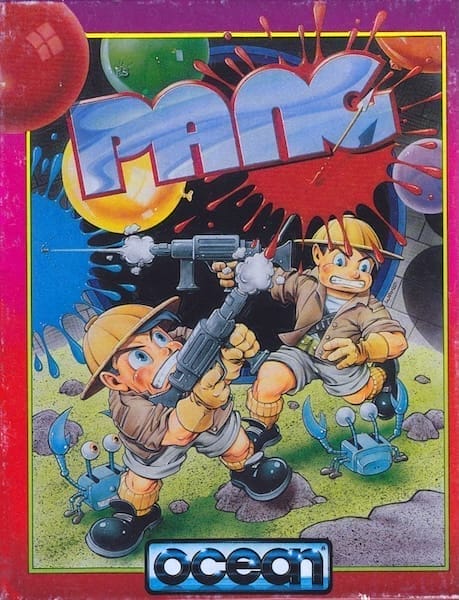
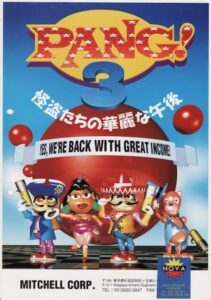
Pang was developed by Mitchell Corporation and published by Capcom in 1989, appearing as Pomping World in Japan and as Buster Bros. on North American cabinets. The premise is simple enough to grasp in one glance and surprisingly hard to master: bouncing balloons drift around the screen, and the player fires a harpoon straight up to burst them. Each hit splits a balloon into two smaller, faster ones, so a careless shot can flood the screen with targets instead of clearing it. Fifty stages march across recognisable world landmarks, layering in ladders, breakable blocks and floating platforms that block the harpoon’s path and force players to reposition constantly. Power-ups add double harpoons, sticky grapples and temporary freezes. Two players can team up simultaneously, which turns crowd control into genuine co-ordination. The design proved durable enough to carry sequels and remakes for more than three decades.
Pang

Similar Posts

  • Super Puzzle Fighter II Turbo

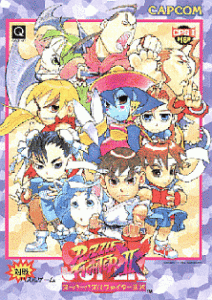
    Introduction Super Puzzle Fighter II Turbo was developed and published by Capcom, released in arcades in 1996, its tongue-in-cheek title deliberately echoing that year’s own Super Street Fighter II Turbo despite having no other Puzzle Fighter games to distinguish itself from. Rather than a traditional fighting game, it is a competitive falling-block puzzle game in…

  • Wrecking Crew

    Introduction Wrecking Crew was developed by Nintendo R&D1, directed by Satoru Okada and produced by Gunpei Yokoi, with designer Yoshio Sakamoto building his first game after a stint as a pixel artist around a simple idea: a puzzle-action game about demolishing walls. It debuted as an arcade cabinet on the Nintendo VS. System in 1984…

  • DoDonPachi II: Bee Storm

    Introduction DoDonPachi II: Bee Storm was developed by International Games System and published by Capcom, released in arcades in 2001 as a sequel to Cave’s original DoDonPachi, notably the only entry in the DonPachi series not developed by Cave itself. The game kept the series’ core vertically scrolling bullet-hell shooting intact, tasking players with weaving…

  • Double Dragon (Arcade)

    Introduction Double Dragon is Technos Japan’s original 1987 arcade beat ’em up, created by designer Yoshihisa Kishimoto as a spiritual successor to his earlier Nekketsu Kōha Kunio-kun after company executives pushed for the next game to support two simultaneous players. Kishimoto drew inspiration from gritty street-gang pop culture of the era, citing the 1979 film…

  • Dynamite Headdy

    Introduction Dynamite Headdy was developed by Treasure and published by Sega, released for the Genesis in 1994 as a puzzle-platformer starring a living puppet named Headdy who can detach and launch his own head as both a weapon and a tool. Different interchangeable heads grant different abilities, from a hammer head for smashing obstacles to…

  • The King of Fighters ’95

    Introduction SNK released The King of Fighters ’95 for the Neo Geo in 1995, the second game in the series. The tournament returns with its three-on-three team battles, but this entry introduced the Team Edit mode, allowing players to build their own teams from any of the fighters rather than using fixed trios. It also…