Life Force

Introduction

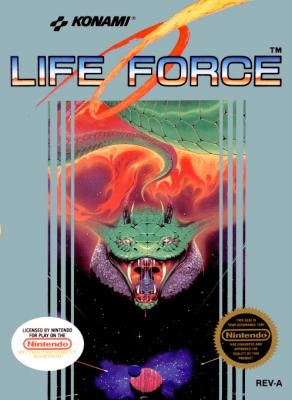
Life Force was developed and published by Konami, originating as the 1986 arcade shoot ’em up Salamander, a spin-off of the studio’s hit Gradius built instead of an immediate direct sequel and released internationally under the Life Force name. Rather than a straight arcade port, Konami used the NES conversion, which reached Japan in 1987 and North America in August 1988, to rework the game’s presentation around an entirely new story about a squadron flying inside a colossal living organism, giving the whole game an organic, biomechanical visual theme distinct from the original Salamander’s more traditional space setting. It kept Salamander’s key innovations over the original Gradius, including a simplified, immediate power-up system instead of Gradius’s segmented meter, full two-player simultaneous co-op, and stages that alternate between horizontal and vertical scrolling rather than staying locked to one direction. Players again pilot the Vic Viper, or a second Lord British ship in co-op, blasting through waves of Bacterion forces and the game’s memorably grotesque organic boss creatures, and the NES version’s distinctive body-horror aesthetic has made it one of the more visually striking shooters in the console’s library.
Life Force

Similar Posts

  • Jungle Strike

    Description Jungle Strike is a video game developed (in association with Mike Posehn) and published by Electronic Arts in 1993. It was originally released for the Mega Drive, before being ported to several other systems including an upgraded version for the Amiga. The Amiga and other home computer conversions were the responsibility of Ocean Software…

  • 1941: Counter Attack

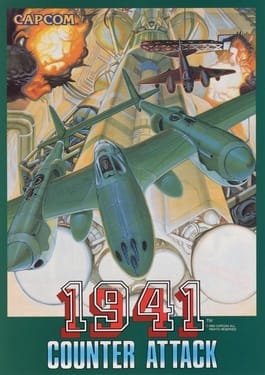
    Introduction 1941: Counter Attack was developed and published by Capcom, released in Japanese arcades in February 1990 and reaching North America that May as the third entry in the studio’s 19XX vertical shoot ’em up series, following 1942 and 1943: The Battle of Midway. Set in a fictionalized continuation of the earlier games’ World War…

  • Bomberman

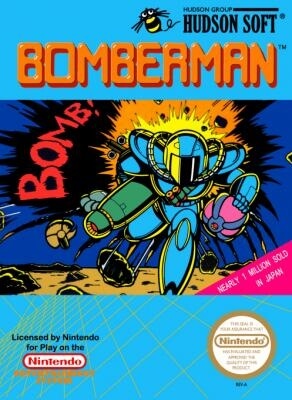
    Introduction Bomberman traces back to a 1983 original created by programmer Yuji Tanaka for Hudson Soft, a Sapporo-based company that had started out selling art supplies and telecommunications gear before moving into home computers and eventually games. This 1985 Famicom/NES version, reportedly ported single-handedly by Shinichi Nakamoto over a marathon 72-hour stretch, is widely considered…

  • Arkanoid II: Revenge of DOH

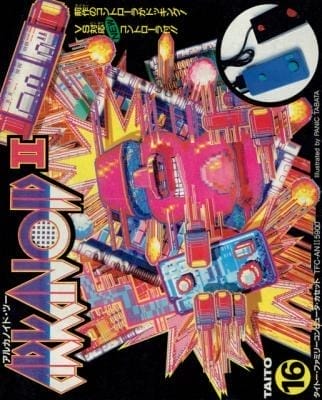
    Introduction Arkanoid II: Revenge of DOH was developed and published by Taito, released for the NES in 1988 as a direct sequel to the original Arkanoid, continuing the Vaus spacecraft’s brick-breaking mission against the resurgent alien force DOH. It expands on the original’s formula with new stage layouts, additional power-up capsules, and boss encounters against…

  • Duck Hunt

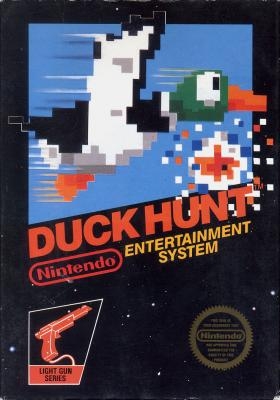
    Introduction Duck Hunt was developed by Nintendo R&D1, the mostly hardware-focused team also behind the NES Zapper light gun itself, with Shigeru Miyamoto directing, Gunpei Yokoi producing, and Hiroji Kiyotake handling the game’s graphics and character designs. It first appeared in Japan in April 1984 for the Famicom and as an arcade cabinet, before becoming…

  • Strikers 1945 III

    Introduction Strikers 1945 III, released in Japan as Strikers 1999, was developed and published by Psikyo, released in arcades in 1999 as the third mainline entry in the Strikers 1945 series. The game moved its setting forward from the World War II theme of the first two games to a more contemporary, near-future military conflict,…