Garou: Mark of the Wolves

Introduction

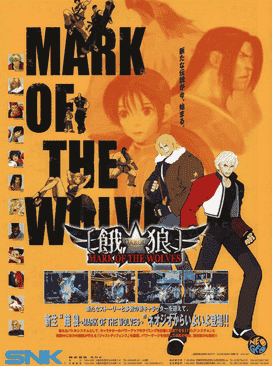
Garou: Mark of the Wolves was developed and published by SNK, released for the Neo Geo MVS arcade system in 1999 as a spiritual successor to the long-running Fatal Fury series, set roughly a decade after the events of Fatal Fury 3 with an almost entirely new cast of playable fighters. The game introduced the Just Defend system, a precisely timed block executed right before an attack lands that granted a brief window of reduced recovery and chip-damage immunity, alongside a Tactical Offense Position mechanic that let fighters be knocked into either a grounded or airborne state depending on how an attack connected, adding a layer of positional strategy uncommon in fighting games of the era. Its detailed, expressive sprite work and tightly balanced roster of new and returning characters, including protagonist Rock Howard, the son of Fatal Fury’s Geese Howard, earned it widespread critical acclaim on release. Garou: Mark of the Wolves is now frequently cited by fighting game communities as one of the finest 2D fighters ever made and the definitive final chapter of SNK’s Fatal Fury lineage, still actively played competitively decades after its original release.

Garou: Mark of the Wolves

How to Play Garou: Mark of the Wolves Online

Press Start Game above, insert a coin with Select and press Start. Choose a fighter, then pick the T.O.P. zone of your life bar. The game uses the four Neo Geo buttons: A light punch, B light kick, C heavy punch and D heavy kick. By default the arrow keys move and Z and X are the first two buttons; check or remap them in Control Settings in the emulator menu.

Key Systems

  • Just Defend: tap back toward an attack right before it hits. You block with no chip damage, recover a little health and can counter immediately.
  • T.O.P. (Tactical Offensive Position): before the match you choose the start, middle or end of your life bar. While your health is in that zone, your fighter hits harder, slowly regains health and gains a T.O.P. attack.
  • Breaking: certain special moves can be cancelled early, letting you extend combos or stay safe.
  • Feints: fake special moves to bait your opponent.

Tips

  • Practise Just Defend against single projectiles first; it is the most important skill in Garou.
  • Choose T.O.P. at the end of the life bar if you like comebacks, or at the start if you prefer an early advantage.
  • Use short hops to pressure without leaving yourself open to anti-air attacks.
  • Start with Terry or Rock, whose moves are straightforward, before trying technical fighters.

Characters and History

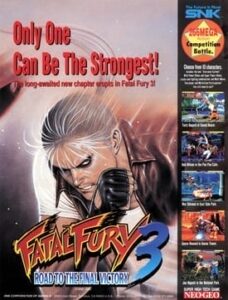
SNK released Garou: Mark of the Wolves in 1999 as the final Fatal Fury game. Terry Bogard returns alongside a new generation that includes Rock Howard, Hotaru Futaba, Gato, B. Jenet, Kim Dong Hwan, Kim Jae Hoon, Kevin Rian, Marco Rodrigues, Hokutomaru, Freeman and Tizoc, with Kain R. Heinlein and Grant as bosses. Play the earlier games in Fatal Fury Special, Fatal Fury 3 and Real Bout Fatal Fury 2.
Similar Posts

  • Shining Force II

    Introduction Shining Force II was developed by Camelot Software Planning and published by Sega, released for the Genesis in Japan in 1993 as the direct sequel to 1992’s Shining Force. The game expanded significantly on the original’s tactical battle formula with a larger roster of recruitable characters, more elaborate grid-based battle maps, and a promotion…

  • Metal Slug

    Introduction Metal Slug was developed by Nazca Corporation, a studio staffed largely by former Irem developers behind games like In the Hunt and GunForce II, and released by SNK for the Neo Geo MVS arcade system in April 1996, shortly before Nazca merged into SNK outright. The game underwent a major shift mid-development: it was…

  • DoDonPachi

    Introduction DoDonPachi was developed by Cave and published by Atlus, released in Japanese arcades in February 1997 as the second game developed by the newly formed Cave studio and the sequel to 1995’s DonPachi. Running on Cave’s custom 68000-based arcade board, the game refined DonPachi’s already demanding bullet-pattern shooting into what many consider one of…

  • Double Dragon II: The Revenge

    Introduction Double Dragon II: The Revenge was developed and published by Technos Japan, released in arcades in 1988 as the direct sequel to the genre-defining original Double Dragon. The game opens with the previous game’s villain gang gunning down Marian, the love interest whose kidnapping drove the first game’s plot, sending martial artist brothers Billy…