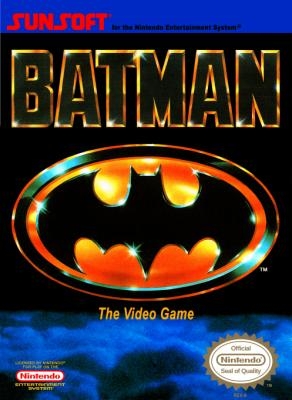
Batman: The Video Game

Introduction

Batman: The Video Game was developed and published by Sunsoft, released on the NES in 1989 as a tie-in to that year’s blockbuster Tim Burton-directed Batman film. Players control the Caped Crusader through a series of side-scrolling stages set in a shadowy, industrial version of Gotham City, using batarangs and a limited melee attack to fight through waves of Joker’s thugs and other underworld enemies on the way to a final confrontation. Rather than closely following the film’s plot beat for beat, the game built its own loose narrative around familiar Batman iconography, with moody, high-contrast pixel art and a memorable synth-driven soundtrack that helped it stand out visually and sonically from many of its contemporaries. Its tight platforming controls, satisfying combat feel, and strong atmospheric presentation earned it a reputation as one of the better superhero licensed games of the 8-bit era, a genre that was frequently hit-or-miss on the NES, and it remains fondly remembered today as one of Sunsoft’s finest NES releases.
Batman: The Video Game

Similar Posts

  • The Goonies

    Introduction The Goonies is a 1986 platform game produced by Konami and based on the Richard Donner film of the same name, released for the Family Computer in Japan in February 1986 but never officially published outside the country on cartridge, though Nintendo did bring a US-exclusive arcade conversion, VS. The Goonies, to PlayChoice-10 and…

  • A Nightmare on Elm Street

    Introduction A Nightmare on Elm Street was published by LJN and developed by Rare, released for the NES in 1990 as a licensed adaptation of Wes Craven’s horror franchise, tasking players with controlling a group of Elm Street teenagers who must find and destroy Freddy Krueger’s bones before he can kill them in their dreams….

  • Ghouls’n Ghosts

    Introduction Ghouls’n Ghosts was developed by Capcom, released as an arcade game in 1988 before being ported to the Genesis by Sega, reaching the console in 1989 as one of the system’s earliest and most technically impressive third-party conversions. Players control the knight Arthur, once again battling through a demon-infested kingdom to rescue Princess Prin…

  • Elevator Action Returns

    Introduction Elevator Action Returns was developed and published by Taito, released in Japanese arcades in 1994 as the sequel to the studio’s 1983 original, Elevator Action. Players once again control a spy infiltrating tall, multi-floor buildings, riding elevators and escalators between levels while shooting enemy agents, collecting secret documents from marked red doors, and avoiding…

  • Bubble Bobble

    Introduction Bubble Bobble was developed and published by Taito, released in arcades in 1986 under the direction of Fukio “MTJ” Mihara. The game follows Bub and Bob, two friends transformed into bubble-blowing dragons, as they climb through 100 single-screen levels trying to rescue their girlfriends and reverse the curse turning them into monsters. Rather than…

  • Super Mario All-Stars

    Introduction Super Mario All-Stars was developed and published by Nintendo, released for the SNES in 1993 as a compilation remastering Super Mario Bros., Super Mario Bros.: The Lost Levels, Super Mario Bros. 2, and Super Mario Bros. 3 with redrawn 16-bit graphics and re-arranged audio. Beyond the visual overhaul, the collection added a save-file system…