Darkwing Duck

Introduction

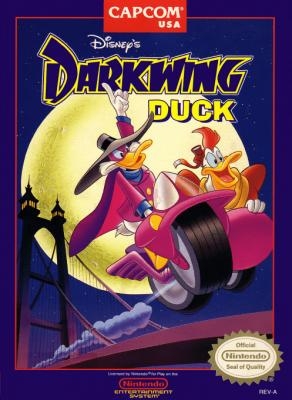
Darkwing Duck was developed and published by Capcom, produced by Tokuro Fujiwara with a score by Yasuaki Fujita, adapting Disney’s 1991-1992 animated series into a platformer that reached North America in June 1992 and Europe the following year. It followed the same basic Mega Man-derived formula Capcom had already used successfully on 1989’s DuckTales, and according to Fujita the game was primarily aimed at the European market, since the source cartoon reportedly never found much of an audience in Japan. Players control the masked crime-fighting duck Darkwing across a series of side-scrolling stages themed around the show’s rogues’ gallery, using a cape for a brief glide, a gas gun with several collectible ammo types, and a crouching shield move to block incoming projectiles while working toward each level’s boss encounter. Its solid platforming mechanics and faithful translation of the show’s pulpy superhero tone made it one of the better-regarded Disney Afternoon tie-in games on the NES, and it was later preserved through a Game Boy port and a modern re-release as part of the Disney Afternoon Collection.
Darkwing Duck

Similar Posts

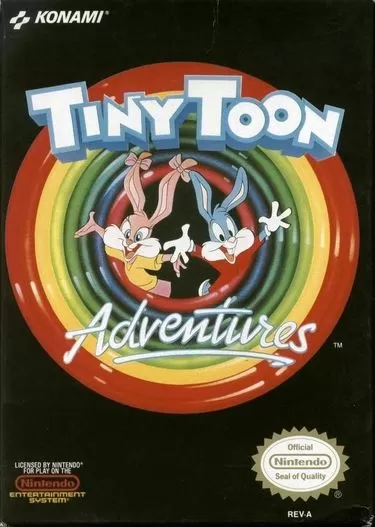
  • Tiny Toon Adventures

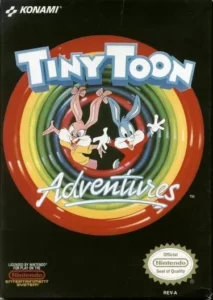
    Introduction Tiny Toon Adventures was developed and published by Konami, directed by Kazuyuki Yamashita with programming by Yuji Shibata, art from Kazumichi Ishihara and Hirotaka Fukuda, and a score credited to Jun Funahashi, Masae Nakashima, and Satoko Miyawaki, releasing in December 1991 as the animated series’ first video game adaptation on any console. Its stage…

  • Doraemon 4

    Description Doraemon 4: Nobita to Tsuki no Oukoku, known simply as Doraemon 4 in the West, was developed and published by Epoch, released for the Super Famicom in 1995 as the fourth entry in the long-running Doraemon action-platformer series based on Fujiko F. Fujio’s manga. Nobita and his friends travel to the Moon Kingdom to…

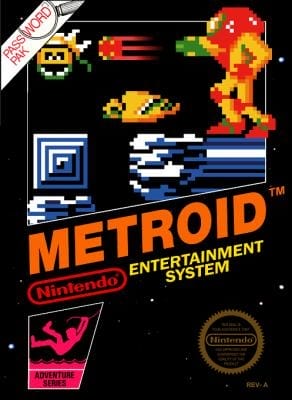
  • Metroid

    Introduction Metroid was developed by Nintendo R&D1 under producer Gunpei Yokoi, first released for the Famicom Disk System in Japan in August 1986 before arriving on cartridge for the NES in North America the following year. The team set out to blend Super Mario Bros’s side-scrolling action with The Legend of Zelda’s open, non-linear exploration,…

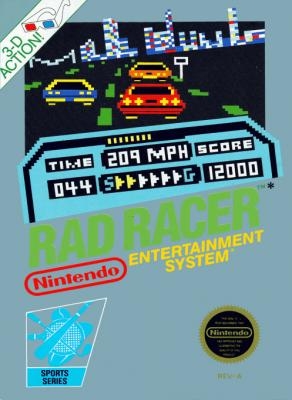
  • Rad Racer

    Introduction Rad Racer, known in Japan as Highway Star, was developed and published by Square, directed by Hironobu Sakaguchi and programmed by Nasir Gebelli, with art from Kazuko Shibuya and an early soundtrack credit for Nobuo Uematsu, several of whom would go on to build the original Final Fantasy together the very same year. Square…

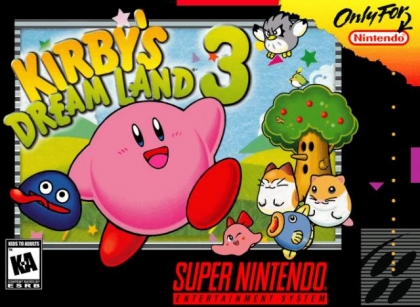
  • Kirby’s Dream Land 3

    Introduction Kirby’s Dream Land 3 was developed by HAL Laboratory and published by Nintendo, released for the SNES in Japan in March 1997 as one of the console’s final major first-party releases, arriving well into the Nintendo 64 era. The game returned to Kirby’s original Dream Land setting with a distinctly softer, pastel, crayon-drawn art…