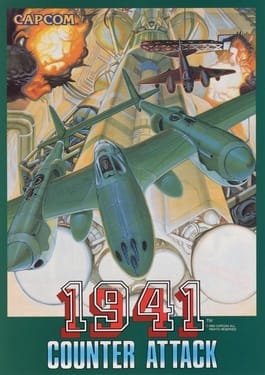
1941: Counter Attack
Introduction
1941: Counter Attack was developed and published by Capcom, released in Japanese arcades in February 1990 and reaching North America that May as the third entry in the studio’s 19XX vertical shoot ’em up series, following 1942 and 1943: The Battle of Midway. Set in a fictionalized continuation of the earlier games’ World War II Pacific theater setting, the game once again puts players in the cockpit of a fighter plane battling waves of enemy aircraft and capital ships, this time introducing a two-player simultaneous co-op mode alongside a new special weapon system that let pilots unleash a limited-use area-clearing attack. The series’ signature Loop maneuver returned from the earlier two entries, still granting brief invincibility and clearing enemy bullets from the screen, now supplemented by additional power-up types collected from downed enemies that let players customize their plane’s weapon loadout mid-stage. Though it moved away from the strict historical grounding of the earlier 19XX games toward a more fantastical, higher-intensity style of enemy design, 1941: Counter Attack remained faithful to the core dogfighting formula that had made the series popular, closing out the original run of Capcom’s WWII-themed shooters before the franchise moved on to 19XX and 1944 years later.
1941: Counter Attack
How to Play 1941: Counter Attack Online
Press Start Game above, insert a coin with Select and press Start. You fly a fighter plane up a vertically scrolling battlefield, shooting enemy planes, ships and ground targets. A second player can join in. By default the arrow keys move and Z and X are fire and bomb; check or change them in Control Settings in the emulator menu.
Controls
| Input | Action |
|---|---|
| Joystick | Fly in eight directions |
| Fire button | Shoot (hold for continuous fire) |
| Bomb button | Mega Crash: a screen-clearing attack from a limited stock |
Tips
- Watch your energy bar. Unlike many shooters, your plane has an energy gauge, so a single hit does not end your life. Pick up items to refill it.
- Collect power-ups dropped by red enemy formations. They upgrade your main shot and add side fighters.
- Use Mega Crash wisely. Save it for moments when bullets fill the screen or for finishing bosses.
- Destroy big targets quickly. Large planes and warships fire dense patterns the longer they stay on screen.
- Stay low on the screen to give yourself time to react to planes flying in from above.
The 19XX Series
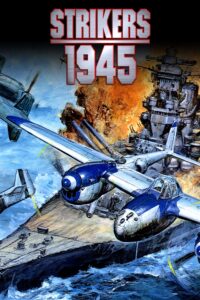
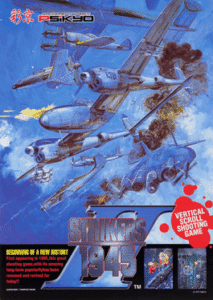
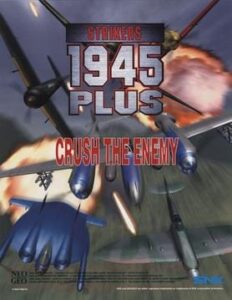
Capcom released 1941 in 1990 as the third game of its World War II shooter series. Play the earlier entries 1942 and 1943: The Battle of Midway, or the later 1944: The Loop Master. Fans of vertical shooters can also try Strikers 1945.