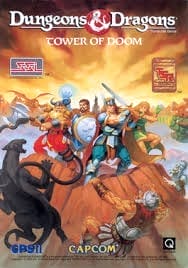
Dungeons & Dragons: Tower of Doom

Introduction

Dungeons & Dragons: Tower of Doom was developed and published by Capcom, released in arcades in 1994 as the studio’s first game built directly on the Dungeons & Dragons tabletop ruleset. Up to four players choose from character classes drawn straight from the D&D rulebook, including Fighter, Cleric, Dwarf, and Elf, each with distinct weapons, spells, and combat styles, then fight their way through a branching fantasy campaign against goblins, ogres, dragons, and other classic D&D monsters. Unlike most beat ’em ups of the era, the game layered in genuine role-playing elements: players could pick up and equip different weapons and armor found during a stage, cast a limited set of spells, and see their choices shape which of several branching paths the story took next. That structure gave Tower of Doom noticeably more depth and replay value than the straightforward brawlers Capcom had built its reputation on, while keeping the core four-player cooperative combat fast and accessible. Its success led directly to a sequel, Shadow over Mystara, two years later, and the pair remain fan favorites among cooperative fantasy beat ’em ups.
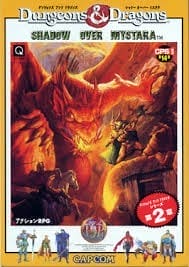
Dungeons & Dragons: Tower of Doom

Similar Posts

  • The King of Dragons

    Introduction The King of Dragons was developed and published by Capcom, released in arcades in 1991 as one of the studio’s earliest attempts to blend traditional beat ’em up combat with genuine role-playing mechanics. Up to three players choose from character classes including Fighter, Cleric, Wizard, Dwarf, and Elf, each with distinct weapons and, for…

  • Final Fight

    Introduction Final Fight was developed and published by Capcom, released in arcades in 1989, designed by Akira Nishitani and Akira Yasuda. Set in the crime-ridden Metro City, the game follows former pro wrestler turned mayor Mike Haggar, along with martial artist Cody and ninja Guy, as they fight their way through the streets to rescue…

  • Crystalis

    Introduction Crystalis was developed and published by SNK, known in Japan as God Slayer: Haruka Tenkū no Sonata, directed and produced by Kazuto Kohno with programming from Yukio Gu, F. Sasami, and Satoru Okada and a soundtrack by Yoko Osaka, releasing there in April 1990 before reaching North America that July. It marked a notable…

  • Strikers 1945 Plus

    Introduction Strikers 1945 Plus was developed by Psikyo and published by SNK for the Neo Geo MVS arcade system, released in 1999 as a Neo Geo-exclusive spin-off within the Strikers 1945 series. Rather than a full numbered sequel, the game functions largely as an expanded remix of the original 1995 Strikers 1945, built specifically to…