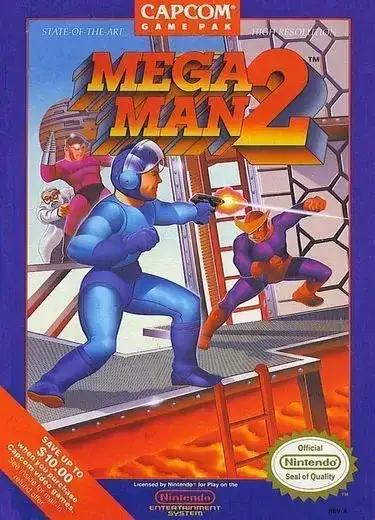
Mega Man 2
Introduction
Mega Man 2 was developed and published by Capcom for the NES in 1988, directed by Akira Kitamura and produced by Tokuro Fujiwara, with Keiji Inafune stepping up from artist on the first game into a more central production role alongside fellow artists Yasuaki Kishimoto and Naoya Tomita and composer Takashi Tateishi. The sequel almost didn’t happen: with the original Mega Man selling only modestly, Capcom management moved the team onto an unrelated baseball-themed project, but the developers pushed hard enough for another shot at the series that Capcom relented, on the condition they also finish the baseball game, leaving only about three to four months to build the sequel. Players once again choose their own order for tackling eight Robot Master stages, absorbing each boss’s weapon to exploit the next one’s weakness, this time with new tools like the Item-1, 2, and 3 support platforms adding fresh routes through the fortress stages. Despite its rushed development, Mega Man 2 sold far better than its predecessor and is widely regarded by fans and critics alike as the high point of the NES-era Mega Man games, thanks to its tighter level design, expanded arsenal, and an especially beloved soundtrack.