Punch-Out!!

Introduction

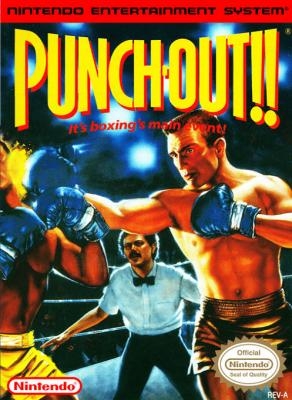
Punch-Out!! was developed by Nintendo R&D3 under director Genyo Takeda, with character designs from Shigeru Miyamoto and production by Minoru Arakawa, adapting Nintendo’s arcade boxing series for the NES. Nintendo first released a Mike Tyson-free gold cartridge in Japan in September 1987, initially given out as a tournament prize, before the more famous Western version arrived that October rebranded as Mike Tyson’s Punch-Out!! after Arakawa saw the boxer fight live and pushed to license his name and likeness to help the game stand out; that version alone sold more than two million copies in North America. Players control a scrappy underdog boxer named Little Mac, watching for each opponent’s telegraphed attacks and openings to land jabs, hooks, and uppercuts against a colorful roster of larger-than-life fighters like Glass Joe, King Hippo, and Piston Honda, working up to a final bout against the game’s famous heavyweight champion. Its pattern-recognition rhythm, exaggerated character animation, and genuinely tough difficulty curve made it one of the most memorable sports games of the NES era.

Punch-Out!!

How to Play Punch-Out!! Online

Press Start Game in the player above and wait a few seconds for the NES emulator to load. You fight as Little Mac from a view behind his shoulder, so every exchange is about reading your opponent, dodging at the right moment and punishing the opening that follows. By default the arrow keys act as the D-pad and the Z and X keys act as the NES buttons; you can check or change every key in Control Settings inside the emulator menu.

Punch-Out!! Controls

NES button Action
B Left punch (to the body)
A Right punch (to the body)
Up + B / Up + A Left or right jab to the face
Left / Right Dodge to the side
Down Block; tap twice to duck
Start Star Punch (uppercut) when you have at least one star
Select (between rounds) Recover some stamina with Doc Louis’s advice

Tips to Beat Every Boxer

  • Watch the tells. Every opponent flashes, twitches or blinks just before a big attack. Learning those signals matters more than fast fingers.
  • Dodge, then counter. After a successful dodge you get a short window where your punches land freely. Throw a quick flurry instead of one slow punch.
  • Save your stars. Stars are earned by hitting opponents at specific moments, usually right as they start an attack. Hold them for a moment when the boxer is open, because getting hit takes a star away.
  • Mind your hearts. Hearts drop when you get hit or when your punches are blocked. At zero, Mac turns pink and cannot punch until he dodges enough to recover.
  • King Hippo cannot be hurt until you hit him in the mouth when he opens it; once his guard drops, body blows finish the job.
  • Write down passwords. The game gives a code after each win in the Major and World circuits, so you can continue later without starting over.

The Road to the Title

Little Mac climbs through three circuits, starting with the Minor Circuit against Glass Joe, Von Kaiser and Piston Honda, then the Major Circuit with Don Flamenco, King Hippo, Great Tiger and Bald Bull, and finally the World Circuit where Piston Honda and Don Flamenco return alongside Soda Popinski, Bald Bull, Mr. Sandman and Super Macho Man. Win the World Circuit belt and the Dream Fight awaits. Each boxer is closer to a pattern puzzle than a random fighter, which is why Punch-Out!! is still a favourite with speedrunners.

Legacy

Punch-Out!! turned Nintendo’s arcade boxing series into one of the NES’s most recognisable games, and its pattern-based fights influenced many later action games. The series continued on the Super Nintendo with Super Punch-Out!!, and fans of quick reflex games may also enjoy Super Dodge Ball on the NES.
Similar Posts

  • Battletoads

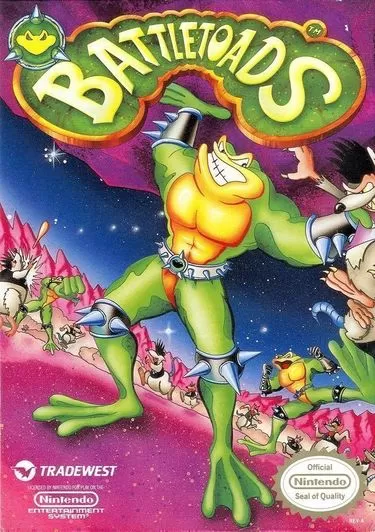
    Introduction Battletoads was developed by Rare and published by Tradewest, designed by Tim and Chris Stamper with a soundtrack by David Wise, and built with the explicit goal of giving Rare its own answer to the era’s Teenage Mutant Ninja Turtles craze. It released on the NES in North America and Japan in June 1991,…

  • Kirby’s Adventure

    Introduction Kirby’s Adventure was developed by HAL Laboratory and published by Nintendo for the NES in 1993, directed and designed once again by Masahiro Sakurai with lead programming by Hiroaki Suga and production input from Satoru Iwata, Shigeru Miyamoto, and Takao Shimizu. Sakurai had originally been asked simply to port the Game Boy original, Kirby’s…

  • Little Nemo: The Dream Master

    Introduction Little Nemo: The Dream Master was developed and published by Capcom, released on the NES in September 1990, loosely based on the 1989 animated film Little Nemo: Adventures in Slumberland, itself adapted from Winsor McCay’s pioneering early-1900s newspaper comic strip. Players guide young Nemo through a dreamlike platforming world, using handfuls of candy to…

  • Snow Bros.

    Introduction Snow Bros. was created by Toaplan as a 1990 arcade game and brought to the NES in 1991, with Capcom handling publishing duties for the home release. Players control Nick and Tom, two snowmen on a mission to rescue a pair of princesses from a demon king, and the core idea is simple but…

  • Metroid

    Introduction Metroid was developed by Nintendo R&D1 under producer Gunpei Yokoi, first released for the Famicom Disk System in Japan in August 1986 before arriving on cartridge for the NES in North America the following year. The team set out to blend Super Mario Bros’s side-scrolling action with The Legend of Zelda’s open, non-linear exploration,…

  • Hudson’s Adventure Island

    Introduction Hudson’s Adventure Island was developed and published by Hudson Soft, released on the NES in 1988 as a loose adaptation of Sega’s 1986 arcade game Wonder Boy, reworked with an original cast and story after Hudson lost the rights to use Sega’s characters directly. Players control Master Higgins, a shirtless island adventurer racing left…