Play super mario word: online - Classic Nintendo SNES game screenshot

Super Mario World

Introduction

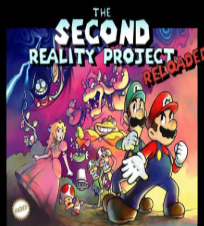
super mario word : A One-Eyed Big Boo called Zycloboo wants to conquer the Mushroom Kingdom, and like Bowser in “The Second Reality Project 1″ he wants to use the power source from another dimension called the Second Reality to get to his goal. To get Mario out of sight (or maybe for some other reasons?) he warps Mario and his Castle in the Second Reality. Mario’s only chance to stop Zycloboo is to find the Power Supply station, which can give him the power he needs for the task – or at least that’s what Zycloboo told him, heeheehee! About the game: The levels for itself are most of the time very “big” compared to the typical SMW-level. From the length, they have more of a Yoshi’s Island-level. You can find a lot of hidden stuff here and there, dozens of bonus rooms and so on. There are also a few levels, where you can go different roads. Sometimes, the second route is more hidden and harder to beat, but it will lead to a secret exit. There are a lot puzzles in the hack as well, but with one major exception near the end of the game they aren’t on the normal route, which means the secret levels are usually more puzzling than the normal ones, but very often they are also more “special”. Unlike my first hack, this time it’s not necessary to find all the hidden Switch Palaces to beat the final boss, but it could be helpful to find them nevertheless. If you stay just on the normal route (without finding any secret exit) you can complete the game after 55 levels. But in that case, you would leave out 36 additional levels. You see, there is much to explore. 😉 About the worlds… nothing outstanding here: World 1 is the typical grassland-World, World 2 is the typical Forest-World, World 3 is the Beach and the Desert, World 4 and 5 aren’t really themed. Here you can find Ice-, Canyon-, Cheese-level and whatever. World 6 is the Venom Underground World, which contains some of the first levels I did for this hack
 

How to play:

↑ = up
→ = right
↓ = down
← = left

Z = A Button
X = B Button
A = X Button
S = Y Button

Q = L Button
E = R Button

Shift = Select
Enter = Start


    Similar Posts

    • Lufia II

      Introduction Lufia II: Rise of the Sinistrals, known as Estpolis Denki II (エストポリス伝記II?, officially translated Biography of Estpolis II[1]) in Japan, and as simply Lufia in Europe and Australia, is a role-playing video game game with puzzle elements developed by Neverland and published in Japan in 1995 by Taito, and in North America and Europe…

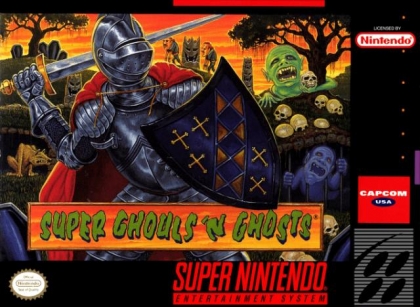
    • Super Ghouls’n Ghosts

      Introduction Capcom released Super Ghouls’n Ghosts for the Super Nintendo in 1991, the third game in the series that began with Ghosts’n Goblins. Sir Arthur must once again rescue the princess, this time from the demon emperor Sardius, travelling through haunted graveyards, a ghost ship, rotting forests and a castle made of ice. The biggest…

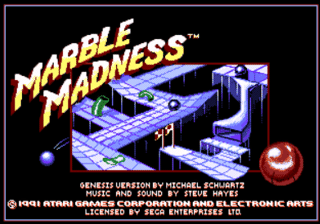
    • Marble Madness

      Introduction Marble Madness was originally developed by Atari Games and released as an arcade game in 1984, before being ported to the Genesis by Electronic Arts, reaching North America and Europe in November 1991 with reprogramming work handled by Michael Schwartz; a separate Japanese release, ported directly by Tengen, Atari’s home-console division, stayed closer to…

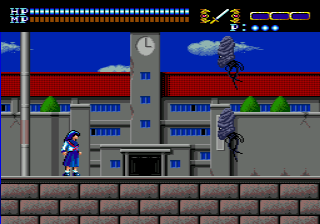
    • Valis: The Fantasm Soldier

      Introduction Valis: The Fantasm Soldier was originally developed and published by Telenet Japan for Japanese home computers in 1986, before reaching the Genesis in 1991 through a port handled by Riot in Japan and Renovation in North America. The game follows Yuko Asou, an ordinary schoolgirl chosen to wield the legendary Valis sword and defend…

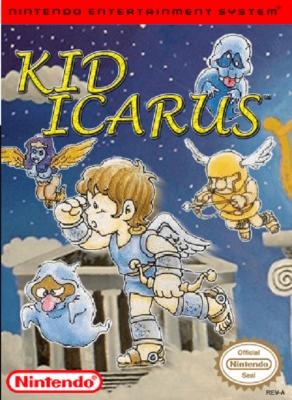
    • Kid Icarus

      Introduction Kid Icarus was developed by Nintendo R&D1 with outside assistance from Tose, directed by Satoru Okada with Yoshio Sakamoto co-directing and streamlining much of the design, and produced by Gunpei Yokoi, arriving on the Famicom Disk System in Japan in December 1986 before an NES cartridge release the following July. The team picked up…

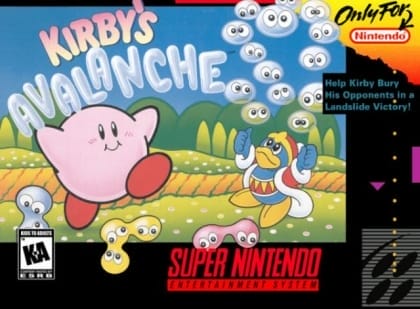
    • Kirby’s Avalanche

      Introduction Kirby’s Avalanche was published by Nintendo, released for the SNES in Europe in February 1995 and North America that April, as a Western localization built directly on top of 1993’s Super Puyo Puyo, with the original Puyo Puyo cast and most of its music replaced by characters and songs from the Kirby series. The…