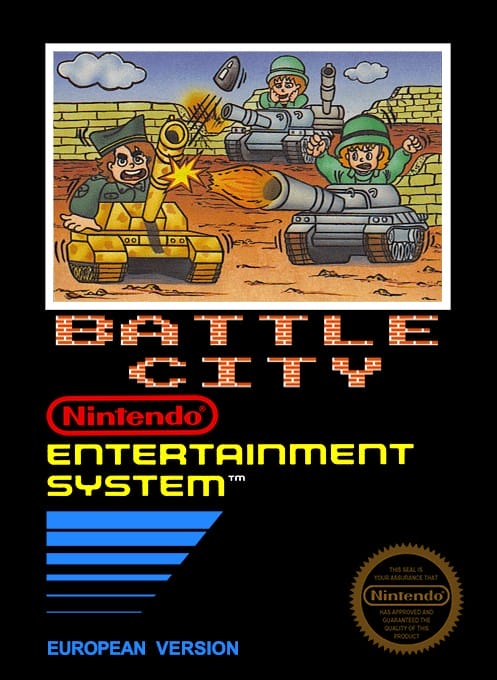
Battle City

Battle City

Introduction

Namco released Battle City for the Famicom in 1985, a tank shooter played on a single screen viewed from above. The player commands a tank whose mission is to defend a base marked by an eagle from waves of enemy tanks. Each stage is made of brick walls that can be destroyed, steel walls that need power-ups to break, water that blocks movement, ice that makes tanks slide and forests that hide units from view. Enemy tanks come in several types, from fast scouts to heavily armoured models that take several shots to destroy. Power-ups appear after destroying flashing tanks, including a star that upgrades firepower, a grenade that destroys every enemy on screen, a helmet for temporary protection, a clock that freezes enemies and a shovel that reinforces the base. Two players can play together, and a construction mode lets players design their own stages. It became one of the best-known Famicom games worldwide.
Battle City

Similar Posts

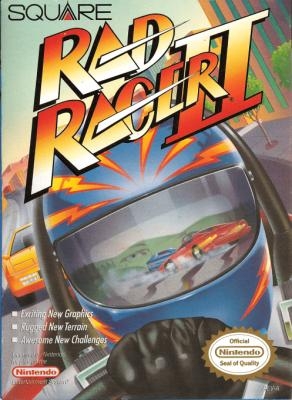
  • Rad Racer II

    Introduction Rad Racer II was developed and published by Square, released for the NES in 1990 as a sequel to Rad Racer. It follows the same pseudo-3D racing format as the original, sending players down a fixed set of named courses against the clock and rival traffic, but drops the original’s stereoscopic 3D glasses gimmick…

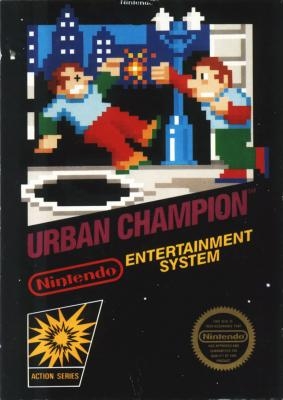
  • Urban Champion

    Introduction Urban Champion was developed by Nintendo R&D1, produced by Gunpei Yokoi, designed by Makoto Kanoh, and scored by Hirokazu Tanaka, releasing on the Famicom and the arcade VS. System in 1984 before reaching the NES in North America and Europe in 1986 as one of the console’s original launch titles. Nintendo built it as…

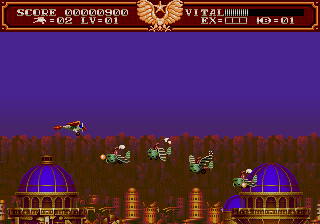
  • The Steel Empire

    Introduction The Steel Empire is a horizontally scrolling shoot ’em up developed by Hot-B and released for the Sega Genesis in 1992, originally launched in Japan under the title Koutetsu Teikoku (literally ‘Empire of Steel’), then brought to North America by Acclaim’s Flying Edge label as The Steel Empire and to Europe under the more…

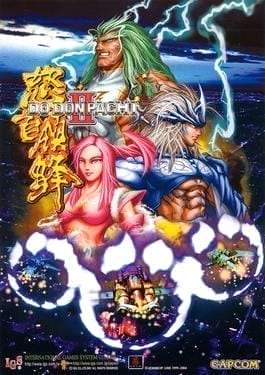
  • DoDonPachi II: Bee Storm

    Introduction DoDonPachi II: Bee Storm was developed by International Games System and published by Capcom, released in arcades in 2001 as a sequel to Cave’s original DoDonPachi, notably the only entry in the DonPachi series not developed by Cave itself. The game kept the series’ core vertically scrolling bullet-hell shooting intact, tasking players with weaving…

  • Contra

    Introduction Contra started out as a coin-operated arcade game from Konami released in February 1987, before the studio built its own home conversion for the NES that arrived in Japan and North America in early 1988, alongside a separate set of European computer ports handled by other studios under region-specific names. Set against a near-future…

  • Adventures of Lolo 2

    Introduction Adventures of Lolo 2 was developed by HAL Laboratory and published by Nintendo, released for the NES in 1990 as a sequel to the original Adventures of Lolo, continuing its single-screen puzzle format where Lolo must collect all heart framers on a stage while avoiding or manipulating monsters to open a path to the…