Fire Emblem: Genealogy of the Holy War

Introduction

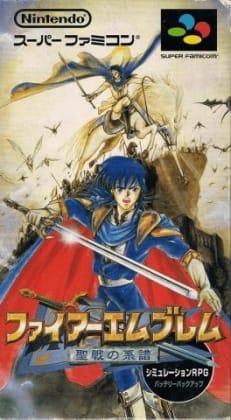
Intelligent Systems developed Fire Emblem: Genealogy of the Holy War for Nintendo, releasing it on the Super Famicom on 14 May 1996 under the direction of Shouzou Kaga. It is the fourth entry in the series and the strangest in structure: instead of many compact maps, it uses a handful of enormous ones, each holding several castles that must be seized in sequence, so a single chapter can run for hours. Its defining idea is generational. The first half follows one cast through a continental war, and the romantic pairings players allow to form between units determine the stats, skills and inherited weapons of the children who become the playable army in the second half. Combine that with permanent death and an inheritance system for money and equipment, and ordinary tactical decisions acquire consequences that stretch across the whole campaign. Never released outside Japan, it remains one of the most ambitious strategy designs on Nintendo’s 16-bit hardware.
Fire Emblem: Genealogy of the Holy War

Similar Posts

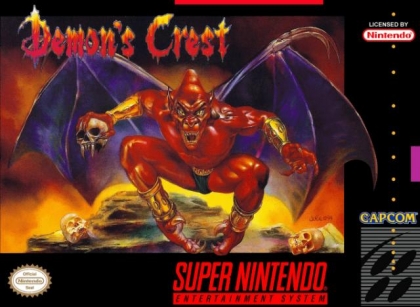
  • Demon’s Crest

    Introduction Demon’s Crest was developed and published by Capcom, released for the SNES in 1994 as a spin-off of the Ghosts ‘n Goblins series starring the gargoyle Firebrand, previously a recurring enemy in that franchise. Players explore a nonlinear world map searching for six elemental Crests that grant new powers and transformations, from a heavier…

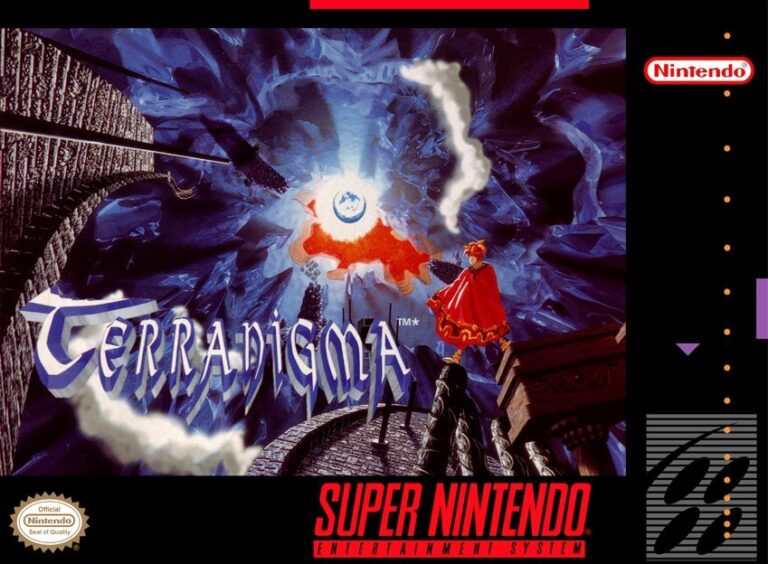
  • Terranigma

    Introduction Terranigma was developed by Quintet and published by Enix, released for the SNES in 1995 as the third entry in the studio’s loosely connected Gaia trilogy alongside Soul Blazer and Illusion of Gaia. Players control Ark, a boy from an underground village who accidentally releases the surface world from a sealed void, then sets…

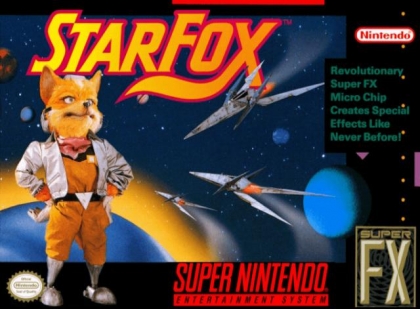
  • Star Fox

    Introduction Star Fox was developed by Nintendo in collaboration with the British studio Argonaut Software, released on the SNES in Japan in February 1993 as one of the first console games built around real-time 3D polygonal graphics, made possible by the custom Super FX chip embedded directly in the game cartridge. Players pilot Fox McCloud’s…

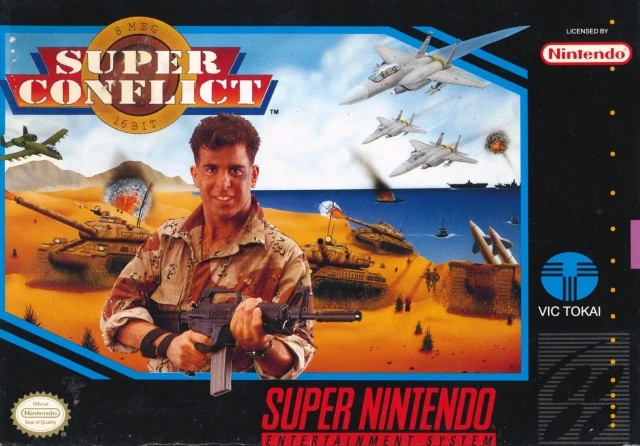
  • Super Conflict

    Introduction Super Conflict is a turn-based military wargame developed by Manley & Associates and published by Vic Tokai, released in North America in March 1993 as the 16-bit successor to the earlier NES game Conflict. Play takes place on hex maps where each side fields infantry, armour, artillery, helicopters, aircraft and naval vessels, and every…

  • Chrono Trigger

    Introduction Chrono Trigger was developed and published by Square, released on the SNES in Japan in March 1995, created by a self-described “Dream Team” bringing together Final Fantasy creator Hironobu Sakaguchi, Dragon Quest creator Yuji Horii, and character designer Akira Toriyama of Dragon Ball fame. The game follows a group of adventurers who discover time…

  • Shining Force II

    Introduction Shining Force II was developed by Camelot Software Planning and published by Sega, released for the Genesis in Japan in 1993 as the direct sequel to 1992’s Shining Force. The game expanded significantly on the original’s tactical battle formula with a larger roster of recruitable characters, more elaborate grid-based battle maps, and a promotion…