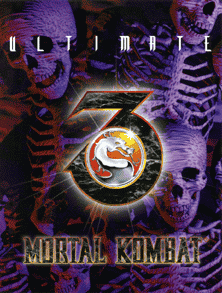
Ultimate Mortal Kombat 3

Introduction

Ultimate Mortal Kombat 3 was developed and published by Midway, released in arcades in 1995 as a significantly revised update to the same year’s Mortal Kombat 3. The game restored several fan-favorite fighters who had been left out of the original Mortal Kombat 3 roster, including Kitana, Mileena, Jax, and Scorpion, bringing the total selectable cast to twenty-three characters, the largest in the series up to that point. Beyond the expanded roster, Midway added new finishing moves called Brutalities, which let players batter an opponent with a precise, timed sequence of hits to explosively destroy them, alongside the returning Fatalities, Animalities, and Friendships from earlier games. The core fighting engine, tournament-style single-elimination structure, and gruesome, ultra-violent presentation that had made the Mortal Kombat series a lightning rod for controversy remained intact, now with faster pacing and tighter balance across the larger cast. Ultimate Mortal Kombat 3 was well received as the definitive arcade version of Mortal Kombat 3, later forming the basis for numerous home ports and remaining a staple of the fighting game’s competitive community for years afterward.
Ultimate Mortal Kombat 3

Similar Posts

  • Raiden

    Introduction Raiden reached arcades in September 1990 and became the breakout success of its developer, Seibu Kaihatsu, after years of lower-profile releases. Distribution was split by territory: Tecmo handled Japan while Fabtek brought the game to North American operators. Players pilot the Fighting Thunder fighter craft against an alien invasion, working through eight densely populated…

  • Super Puzzle Fighter II Turbo

    Introduction Super Puzzle Fighter II Turbo was developed and published by Capcom, released in arcades in 1996, its tongue-in-cheek title deliberately echoing that year’s own Super Street Fighter II Turbo despite having no other Puzzle Fighter games to distinguish itself from. Rather than a traditional fighting game, it is a competitive falling-block puzzle game in…

  • Metal Slug X

    Introduction Metal Slug X was developed and published by SNK for the Neo Geo MVS arcade system, released in 1999 as an enhanced remake of 1998’s Metal Slug 2, built specifically to fix that game’s notorious slowdown by trimming and rebalancing its most sprite-heavy sequences. Alongside the technical cleanup, SNK reworked enemy placement, added new…

  • The King of Fighters 2000

    Introduction SNK released The King of Fighters 2000 for the Neo Geo in 2000 as the direct follow-up to The King of Fighters '99. The story continues the NESTS saga, with the mysterious organisation working behind the scenes of a new tournament while K' and his allies try to uncover its plans. Players pick a…

  • 1944: The Loop Master

    Introduction 1944: The Loop Master was developed by Eighting and published by Capcom, released in arcades in 2000 as a direct continuation of the 19XX series that began with 1942 back in 1984. Set in the closing stages of World War II, the game returns players to the vertical-scrolling shoot ’em up formula of its…

  • Galaga

    Introduction Galaga was developed and published by Namco for arcades in 1981, led by longtime company veteran Shigeru Yokoyama, and released in North America by Midway. It exists as a direct sequel to 1979’s Galaxian, Namco’s first genuine arcade hit, and came about somewhat by necessity: as Galaxian cabinet sales began slowing by the early…